







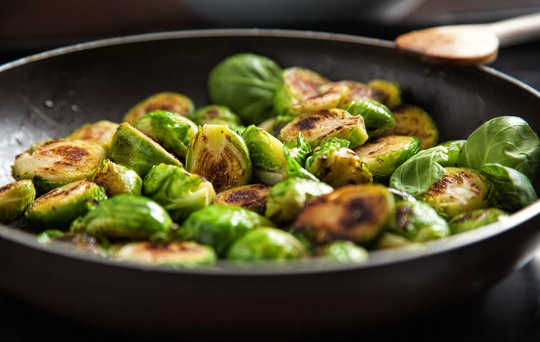
Sensational super food – seared. Shutterstock
Brussels sprouts, often misunderstood and maligned, are a nutritious and versatile vegetable that can be enjoyed year-round. With a history dating back to Roman times and a wealth of health benefits, these sprouts deserve a place on the dinner table beyond the holiday season. Innovative cooking methods can transform their flavor and texture.
In This Article
- What makes Brussels sprouts so divisive?
- What nutritional benefits do Brussels sprouts offer?
- How can Brussels sprouts be prepared to enhance their flavor?
- What are some practical ways to incorporate Brussels sprouts into meals?
- What limitations or misconceptions exist about Brussels sprouts?
Brussels sprouts, like their European namesake, divide opinion. Some people embrace the flavour and familiarity of the small green vegetable. To others, they are an object of derision and disgust.
Whatever you think of them, millions of sprouts will be sold, cooked, and either eaten or pushed to the side of the plate over the coming weeks. And they have been part of our diet for centuries. Culinary mythology suggests they were first seen for sale in the markets of Belgium in the 1200s, but their ancestors date back to Roman times.
In many countries, Brussels sprouts are now as traditional as turkey at Christmas, with both appearing in festive records from the 16th century and becoming commonly consumed from the 18th century onwards.
Sadly another (particularly British) tradition at Christmas time is to boil sprouts until they are soft, soggy and sulphurous. This unfortunate introduction to overcooked sprouts in childhood may have traumatised generations and given the sprout a much undeserved reputation.
The problem has not been the sprout itself, but the the cooking method. So surely even the most ardent shunner of sprouts should now be able to rediscover and celebrate this nutritious and versatile vegetable.
Versatile
Brussels sprouts are buds that grow out the side of long stemmed cabbages, like baubles decorating a size zero Christmas tree. You could roast a whole stalk of sprouts for an impressive dinner table centre piece.
They are ideal shredded raw into winter salads or sliced and added to seasonal stir fries. They combine very well with garlic as well as bacon, and roast well too. Leftovers can be mixed with mashed potatoes to make bubble and squeak.
Boiling is actually the least nutritious way to cook Brussels sprouts, as several of the key nutrients they contain are water soluble and get lost in the cooking water.
Nutritious
So what nutritional value do Brussels sprouts boast? For a start, they are extremely low in calories, with around 34 kcal in an 80g portion. They are also virtually fat free and low in salt and sugar.
Sprouts are high in fibre, and one portion contains enough vitamins A, C and K to meet a typical adult’s daily requirements, as well as a quarter of their required vitamin E and folic acid.
They also benefit from decent amounts of B vitamins and minerals including calcium, phosphorus, potassium and manganese.
Brussels sprouts are full of healthy compounds called “glucosinolates”. These contain sulphur and are responsible for the mustard and pepper flavour in raw sprouts – and the rotten egg smell when they are overboiled.
Glucosinolates are broken down in the body into “isothiocyanates” that help activate cancer-fighting enzymes in the body. Brussels sprouts have been shown to contain higher levels of glucosinolates than broccoli and cauliflower.
The fibre present in Brussels sprouts has also been linked to a reduced risk of colon cancer, possibly by increasing the frequency of bowel movements and speeding up the time taken for food to travel through the digestive system.
Yet another beneficial phytochemical in Brussels sprouts is lutein. This is a carotenoid responsible for the yellow colour of overcooked sprouts and which helps protect plants from the harmful effects of too much sunlight.
Remarkably, lutein from the human diet is transported to the eye where it helps reduce the risk of light-induced oxidative damage that could lead to loss of sight through age-related macula degeneration.
Sprouting with goodness
And Brussels sprouts are not just for Christmas. Like the majority of the cabbage family, they grow well in countries like the UK and the Netherlands and are in season for around half the year (from October to March). They are an economical vegetable to buy and will have low food miles if grown in the country where they are consumed.
Advances by talented vegetable breeders and growers have created a wealth of new sprout varieties. There are smaller, sweeter button sprouts, and red versions. One recent innovation was a hybrid between sprouts and kale, which produces a sprout with an open flower-like shape and a sweeter, nutty flavour.
Traditional, supremely healthy, tasty and good for the environment, Brussels sprouts are one of Mother Nature’s wonderful gifts to the table. It’s time to lift them from their humble status, celebrate their goodness and appreciate them for the super food they really are.
About The Author
Trevor George, Lecturer in Nutrition and Dietetics, King's College London
This article is republished from The Conversation under a Creative Commons license. Read the original article.
Further Reading
-
Brassicas: Cooking the World's Healthiest Vegetables: Kale, Cauliflower, Broccoli, Brussels Sprouts and More [A Cookbook]
Laura B. Russell focuses on the cabbage family and shows how vegetables such as Brussels sprouts, broccoli, cauliflower, and kale can become flavorful centerpieces rather than obligatory side dishes. The recipes emphasize cooking techniques that bring out sweetness, texture, and the distinctive character of these nutrient-rich vegetables.
Amazon: https://www.amazon.com/exec/obidos/ASIN/1607745712/innerselfcom
-
The Vegetable Butcher: How to Select, Prep, Slice, Dice, and Masterfully Cook Vegetables from Artichokes to Zucchini
Cara Mangini provides practical guidance for selecting, preparing, cutting, and cooking a wide range of vegetables. Her approach helps home cooks understand how preparation and cooking methods can transform vegetables from something merely nutritious into food that is genuinely enjoyable.
Amazon: https://www.amazon.com/exec/obidos/ASIN/0761180524/innerselfcom
-
Eating on the Wild Side: The Missing Link to Optimum Health
Jo Robinson examines how the varieties of fruits and vegetables we choose, along with the ways we store and prepare them, can influence their nutritional value. The book combines food history with research on plant nutrients and offers practical ideas for getting more nutritional benefit from everyday produce.
Amazon: https://www.amazon.com/exec/obidos/ASIN/0316227935/innerselfcom
Article Recap
Brussels sprouts are a nutrient-dense vegetable that can be enjoyed in various culinary applications. Exploring new cooking methods can help combat their negative reputation and encourage healthier eating habits.
#InnerSelfcom #BrusselsSprouts #Superfood #Nutrition #HealthyEating #CulinaryInnovation #VegetableVarieties #SustainableEating #FoodHistory