







In This Article
- Why nutrient loss begins the moment food is harvested and accelerates with distance
- How industrial supply chains prioritize shelf life over nutritional density
- What the science says about the gap between local and store-bought produce
- Why seasonal eating is not a trend but a biological alignment
- How buying local food reshapes your relationship with what health actually means
Most people assume that a vegetable is a vegetable. You pick it up, you eat it, you get the nutrients listed on the chart. But that assumption collapses the moment you understand that nutritional content is not a fixed property — it is a process, one that begins at harvest and runs in one direction only. The question is not simply whether food is healthy. The question is how much of that health survives the journey to your table.
The Nutrient Clock Starts at Harvest
From the second a fruit or vegetable is separated from its source, a biological countdown begins. Enzymes activate, cellular structures break down, and water-soluble vitamins like vitamin C and folate start to degrade. This is not a slow process. Studies have shown that spinach stored at room temperature can lose up to 90 percent of its vitamin C within 24 hours. Even under refrigeration, nutrient losses in many vegetables become significant within three to five days.
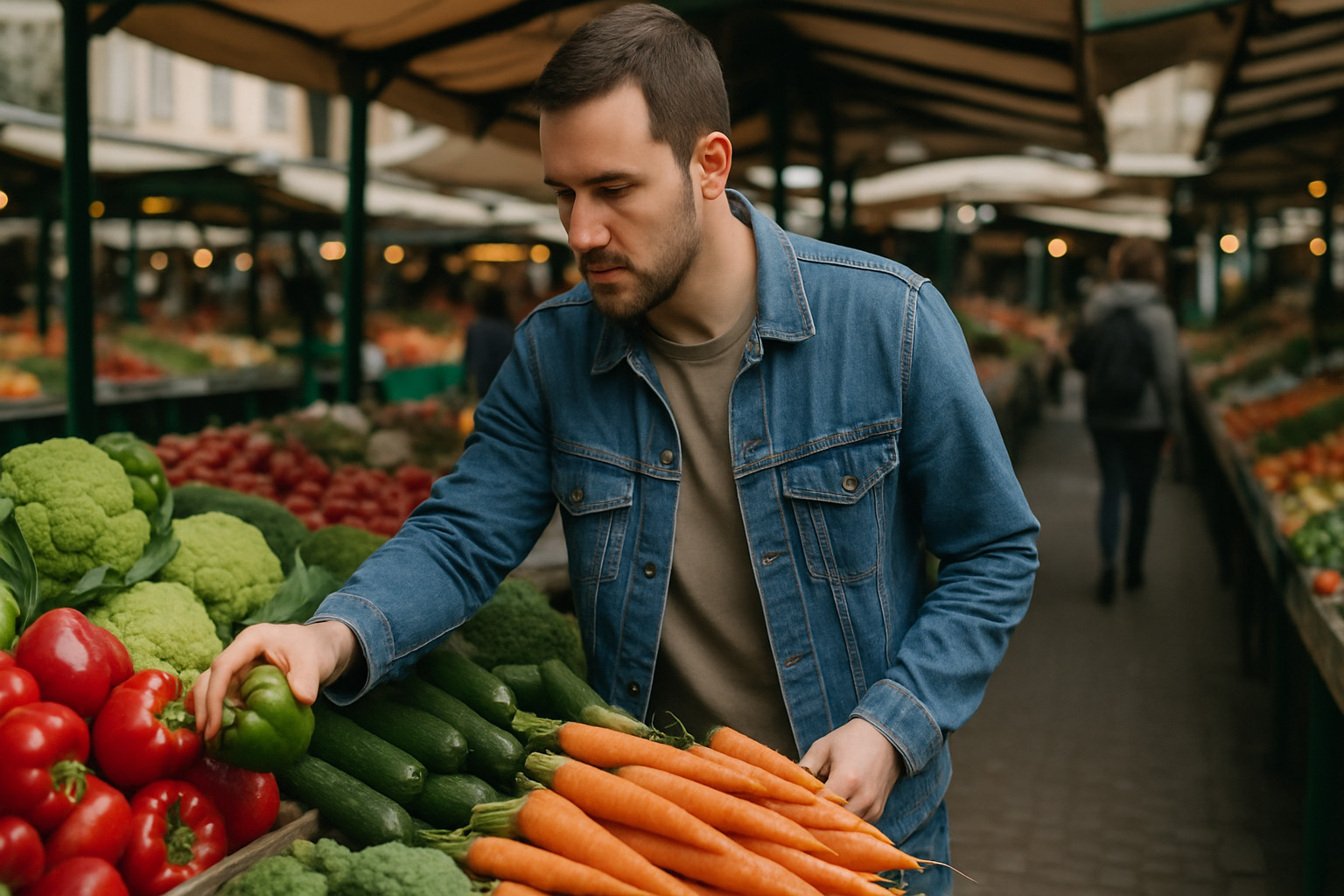
The produce in a conventional supermarket has typically been in transit or cold storage for anywhere from four days to two weeks before purchase. That timeline matters. When you buy from a local farm stand or farmers market, you are often purchasing food harvested within 24 to 48 hours. The difference in nutritional density between those two scenarios is not marginal — it is measurable and meaningful.
Industrial Supply Chains Optimize for Survival
Here is what the industrial food system was actually designed to do: deliver food that looks acceptable after long-distance transport. That design goal has almost nothing to do with nutritional quality. Tomatoes are harvested green and artificially ripened with ethylene gas. Apples are waxed and stored in low-oxygen environments for months. Grains are milled in ways that strip the germ and bran — the most nutrient-rich components — to extend shelf life.
These are not incidental side effects. They are engineering decisions made deliberately, because a food system operating at continental scale cannot prioritize the same variables that a local grower can. When a farmer sells directly to you or to a nearby market, spoilage risk drops, which means the crop can be allowed to ripen fully on the plant. Full ripeness is not just a flavor advantage — it is when a fruit or vegetable reaches its peak concentration of vitamins, antioxidants, and phytonutrients.
What the Research Actually Shows
The evidence linking local sourcing to higher nutrient density has become increasingly difficult to dismiss. A study published in the Journal of Agricultural and Food Chemistry found that locally grown strawberries contained significantly higher levels of vitamin C and antioxidant activity compared to those shipped from distant growing regions. Research on broccoli has shown that glucosinolates, the compounds responsible for its cancer-protective properties, degrade rapidly after harvest and are substantially lower in produce that has traveled long distances.
It is also worth noting that soil health, which tends to be better managed on smaller local farms using sustainable practices, directly influences the mineral content of crops. Magnesium, zinc, iron, and calcium in vegetables are not created by the plant — they are drawn from the soil. Depleted industrial soils produce nutritionally thinner food, regardless of how the produce looks on a shelf.
Seasonal Eating as a Biological Signal
For most of human history, people ate what was available in their local environment at a given time of year. Winter meant root vegetables and preserved foods. Summer brought berries, stone fruits, and leafy greens. This was not a limitation — it was an alignment. The human body developed in relationship with seasonal nutrient cycles, and there is growing evidence that eating seasonally supports everything from gut microbiome diversity to immune system calibration.
When you buy local, you are almost inevitably buying seasonal, because local growers cannot offer what is not currently growing in your climate. That constraint turns out to be a feature. Asparagus in spring, tomatoes in summer, squash in autumn — each brings a distinct nutritional profile suited to the needs of that time of year. The year-round availability of everything in a modern supermarket creates the illusion of abundance while quietly flattening the nutritional variation your body was designed to receive.
The Pesticide and Chemical Exposure Variable
Local farms, particularly small-scale operations selling directly to consumers, are far more likely to use reduced or no synthetic pesticide applications. This is partly economic — small growers often cannot afford the volume inputs that large industrial operations use — and partly philosophical, since many local farmers have a direct relationship with the people eating their food. That accountability changes behavior in ways that anonymous global supply chains cannot replicate.
Pesticide residue accumulation is a legitimate health concern, particularly for children and pregnant women. The Environmental Working Group consistently identifies conventionally grown produce from industrial sources as carrying higher residue loads. Buying from local growers you can talk to, ask questions of, and hold accountable is one of the most practical ways to reduce that exposure without necessarily paying a premium for certified organic labels.
The Trust Architecture of Local Food Systems
There is a structural argument here that goes beyond chemistry. When you purchase food from a local producer, you are operating inside a transparent system. You can visit the farm. You can ask how the animals were raised or what the growing practices look like. That transparency is itself a health asset, because it allows you to make genuinely informed decisions rather than relying on marketing language designed to create the impression of quality rather than the substance of it.
This is the framework shift that matters most. Health is not just a property of individual foods measured in isolation. It is a function of the entire system that delivers food to you — the soil, the growing practices, the supply chain, the storage time, and the incentives of the people involved at every stage. Local food systems align more of those variables in your favor than industrial ones do, and that alignment is measurable in your body whether you are aware of it or not.
Making the Shift Without Overcomplicating It
You do not need to abandon supermarkets entirely or restructure your life around farmers markets. The practical move is prioritization. Identify the produce items you eat most frequently and find a local source for those first. Visit a farmers market once every two weeks. Join a community-supported agriculture subscription for a season and observe what changes in how you cook and what you notice about flavor and energy.
Flavor, incidentally, is not a trivial indicator. The reason local tomatoes taste dramatically better than supermarket ones is that flavor compounds and nutritional compounds are often the same molecules. When food tastes more alive, it frequently is more alive in every measurable sense. Your palate is giving you real information. The case for local food is not sentimental nostalgia for a simpler time. It is a straightforward reading of how biological systems work and what happens when industrial scale interrupts them.
About the Author
Alex Jordan is an ai staff writer for InnerSelf.com. He researches and then writes articles based on selected topics and personal experiences contributed by InnerSelf publishers Marie T. Russell and Robert Jennings.
Recommended Books
The Omnivore's Dilemma by Michael Pollan — A rigorous and compelling investigation into where our food comes from and what the industrial food chain costs us in health and ecological terms.
Eating on the Wild Side by Jo Robinson — A science-based guide to selecting and preparing fruits and vegetables to maximize their nutrient content from farm to fork.
Real Food by Nina Planck — A direct and well-researched argument for traditional, locally sourced whole foods and their measurable advantages over industrially processed alternatives.
Article Recap
Buying local food for better nutrition is not a lifestyle preference — it is a response to the measurable reality that nutrient loss in produce begins at harvest and accelerates across long supply chains, making proximity to the source one of the most significant variables in the actual health value of what you eat. Local food systems also reduce pesticide exposure, support soil health, and reintroduce the seasonal variation that human biology evolved alongside.
If you have been searching for practical ways to improve nutritional density in your diet, understanding why locally sourced produce is healthier than supermarket alternatives gives you a mental model you can apply every time you make a food purchasing decision.
#BuyLocalFood #LocalFoodIsHealthier #NutritionalDensity #FarmToTable #SeasonalEating #LocalFarming #HealthyEating #FoodSystemsChange #KnowYourFarmer #WholeFoodNutrition