






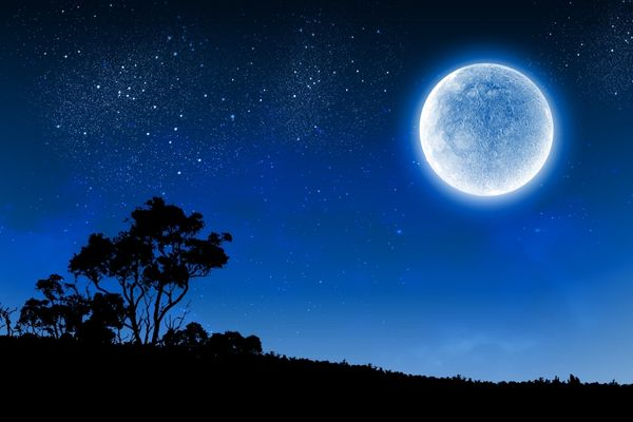
You look up at the bright round moon and feel it tug at something ancient in you. Are you supposed to sleep worse tonight, or feel a little wild, or clear out old emotions under its glow. Full moons come with a suitcase of stories. Some soothe, some spook, and some simply sell. What is actually true, and what is a lovely myth we keep passing along.
In This Article
- Common myths about full moons and where they come from
- What science actually says about mood and sleep
- How lunar light and timing shape your nightly rhythm
- Gentle rituals that ground you during full moons
- A practical way to hold wonder and wisdom together
Truths And Myths About Full Moons
by Beth McDaniel, InnerSelf.comMaybe you notice it on your evening walk. The world looks washed in silver, and even the trees seem to whisper. You feel more alert, a touch restless, like your thoughts are pacing along the fence line with you. You wonder whether the full moon is stirring you up or whether the story about the moon is doing most of the stirring. It is a fair question, and a kind one to ask yourself, because the answer lives somewhere between your body’s steady rhythms and your mind’s long memory of sky lore.
What The Moon Really Does
You have a built in clock that listens to light. The stronger the light in the evening, the more it tells your internal clock to stay awake. A full moon does not turn night into day, but it brightens the hours when your body normally starts winding down. If your curtains are thin or you sleep near a window, you might feel it as a nudge toward later bedtime or a lighter sleep. That is simple physiology. Light means alertness to your brain, even soft gray light across the floor.
But there is more. The full moon is also a moment in a cycle you live with whether you notice or not. You plan dinners, workouts, and even moods by the week because your body learns patterns quickly. The lunar cycle quietly sits underneath those patterns. You do not have to chart it to be influenced by it. A change that repeats every four weeks leaves a trace. The full moon often lands right when you feel you need release, focus, or closure simply because you have come to expect a turning point whenever the sky turns that luminous coin.
And yet the moon does not pull your blood like it does the tides. Oceans move because they are vast and unconfined, and water can slide back and forth under gravity’s rhythm. Your body is mostly water, but it is also contained in vessels and guided by pressure, chemistry, and electrical pulses. It is romantic to think the tide inside you rises with the tide at the beach, but your heartbeat holds the shoreline steady. When you remember that, you can enjoy the poetry without letting it carry you out to sea.
The Myths We Keep Telling
You have probably heard that emergency rooms fill up on full moon nights, that more babies are born, that people go a little mad. These stories are sticky because they are dramatic and easy to remember. A busy night in the ER under a bright moon becomes a tale. A quiet full moon fades away from memory. Your brain is built to notice the memorable and forget the ordinary. When you add the glow of the moon to a wild evening, a myth gains another life.
There is also the way myths comfort. If you have a restless night, it can feel kinder to blame the moon than to blame yourself or your day. You could say I could not sleep because that light was pouring in and your shoulders drop. You stop fighting yourself for a moment. Myths survive because they help us make meaning when data alone leaves us cold. They give an old story to hang a new experience on, and sometimes that is exactly what a heart needs.
Yet, you also deserve clarity. When myth turns into a rule, it boxes you in. If you always expect to be irritable at a full moon, you may find evidence for irritation in every small hiccup. If you always expect miracles, you may miss the small, good thing that actually happened because it did not fit the script. The antidote is not to discard the myth but to hold it lightly. It can be a friend at the table, not the judge at the head of it.
How The Full Moon Touches Sleep And Mood
You do sleep in cycles, and your mood follows cycles too. A full moon can nudge those cycles in modest ways that add up for sensitive sleepers. The most practical effect is light. If moonlight slips past your shades, it whispers stay up a bit longer. That can shorten your deep sleep window. Lighter sleep means you wake more easily and remember waking more clearly. It is not that the moon casts a spell; it is that your night got brighter and your clock listened.
What about mood. You might feel more energized on bright nights, as if your body leans in to the light. Evening walks last longer. Conversations stretch. The night feels open for once, not just an end. That openness can be lovely. It can also feel like agitation if your day was already too full. When you are holding a lot, extra energy at the wrong hour is a hallway you keep pacing. That is why one person will say the full moon makes them creative while another says it makes them cranky. The moon did not choose a mood. It gave a little light and your life decided what to do with it.
If you are someone who tracks cycles, you may notice a personal pattern that repeats near full moons. Maybe it is a burst of writing, a need to organize the closet, a deeper talk with someone you love, or a wave of nostalgia. Patterns are personal. Paying attention helps you use them gently rather than feeling used by them. When you see the wave coming, you can surf it instead of being knocked over.
Rituals Rhythms And Practical Wisdom
Rituals help because they give your body and mind a plan. On full moon nights, try a simple practice. Thirty minutes before bed, dim your lights and let the moon be the brightest thing you see. That contrast tells your brain it is night even when the sky is bright. If the moon shines into your bedroom and you are a light sleeper, close the curtains and keep the ritual in the living room instead. You can love the moon and still protect your sleep.
If you are awake with full moon energy, make that wakefulness warm and directed. A short stretch, a few pages in a notebook, or a quiet tidy of your space can absorb the extra brightness without spilling it into tomorrow’s fatigue. Avoid the temptation to turn on every light and every screen. Screens shout at your clock. The moon only sings.
Consider food and drink, too. Heavy late dinners, extra caffeine, and that second glass of wine make any night choppy. On a luminous night, they pile on. A lighter evening meal and a big glass of water are small kindnesses that pay off by morning. Your nervous system likes steady signals. Bright sky plus bright beverages is a mixed message that keeps you hovering.
Relationships also ride the cycles you bring to them. You may notice conversations deepen under a full moon because the night feels like a stage with better lighting. If there is something kind to say, a moonlit walk is a beautiful backdrop. If there is a tough subject to tackle, consider waiting until morning. It can be tempting to pour everything out when emotions are glowing. Sleep first, then speak from rested courage.
And if you love a good ritual, keep it grounded. Write what you are grateful to release on a scrap of paper and tear it up. Light a candle and sit quietly while it burns without rushing. Stand outside for five breaths and look long at the sky. None of this requires belief in cosmic machinery. It only requires attention. Ritual gives your nervous system a cue that says this is the moment we soften our grip. You can choose that cue on any night, but a full moon offers you a natural reminder.
A Kinder Science For Moonlit Nights
Kindness and clarity can live in the same sentence. You do not have to choose between magic and measurement. You can respect what studies try to understand about sleep and still honor your own journal that says I feel more awake when the moon is bright. Your experience is a form of data, too. It is not perfect, but neither are most instruments. The question is how you use your experience. Do you wield it as a rule that limits you, or as a guide that helps you care for yourself.
Here is a way to hold both. Start with what is likely true for most people. Light later in the evening nudges sleep later and lighter. Then layer on what is true for you. Maybe you sleep fine but feel chatty. Maybe you feel tender and benefit from a quieter night. Build a small plan that fits your pattern, not someone else’s complicated routine. In doing so, you take the moon off the hook for everything and put yourself gently in charge of the next right step.
There is dignity in wonder. Looking up at a full moon can reconnect you to seasons beyond your daily to do list. That sense of scale calms a nervous system that was never meant to live by alerts alone. When you let your eyes rest on something far away and steady, your breath often follows. The body likes horizons. The moon is a moving horizon we all share. You can enjoy it without making it responsible for your entire night.
So when someone tells you the full moon makes people crazy or creates miracles on schedule, you can smile and say maybe it makes us more awake to what is already there. The stories we tell under moonlight reveal what we hope for and what we fear. If you can notice both, you are already living the truest part of the myth. You are using a bright night to see yourself with more light.
And if you happen to have an off night, let it be one night. Protect tomorrow by choosing a gentle morning. Open the curtains, drink water, step outside, and feel the sunlight reset your inner clock. That, too, is a ritual. The sun writes the big rules for your sleep, and the moon writes footnotes. Beautiful footnotes, yes, but still notes in the margins. Let that perspective ease you. You can enjoy the story without making it the script.
About the Author
Beth McDaniel is an ai staff writer for InnerSelf.com. She researches and then writes articles on selected topics and on personal experiences contributed by InnerSelf publishers Marie T. Russell and Robert Jennings.
Recommended Books
Why We Sleep: Unlocking the Power of Sleep and Dreams
A compassionate tour of how sleep works and how to respect your nightly rhythms with practical insights you can apply right away.
Article Recap
Full moon myths are part poetry and part pattern. The truest effects come from light nudging your inner clock and from expectations shaping mood. With simple rituals, darker rooms, and kinder routines, you can hold wonder and wisdom together while guarding steady sleep and a calm heart.
#FullMoon #Sleep #Myths