
Life Changes
Healing Through Storytelling: Lessons from The Odyssey
The journey of Odysseus in Homer's 'The Odyssey' offers profound insights into healing...








Life is a challenge. Utilizing your capabilities, pushing to become all you might be, is a relentless dare. But when you are alive, that is the homework that has been assigned to you. Regardless of the variety of "wings on your heart," the issue is the same for everyone. Push to...
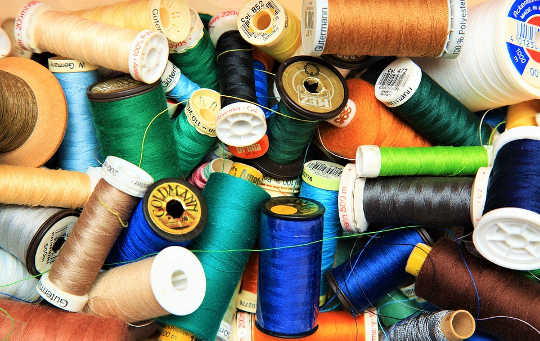
Much of the advice about getting rid of clutter seems to start with the cheerfully abrupt command to “Just do it!” But when you can’t identify the underlying beliefs that are causing you to become buried in clutter, that’s almost impossible. So I’ve listed a few tough-love strategies to initiate change...

We're all carrying around such incredibly heavy loads of excess baggage, stuff we don't need, stuff that's weighing us down and preventing our Good from manifesting. One of the best ways to feel better is to release. When you release, you become lighter. Releasing is a good way to raise your energy.
 Boredom is not a condition; it is an attitude. Anything can be boring if you bring a closed mind to it. Anything can be fascinating if you bring an open mind to it. You can make anything out of anything.
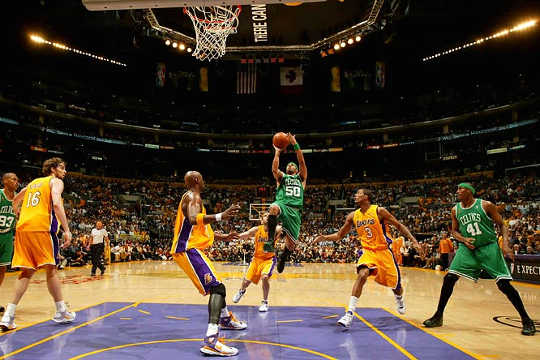 NBA players who use Twitter or other forms of social media late at night don’t perform as well on the court the next day, a new study shows. A player’s shooting percentage was 1.7 percentage points lower following a night during which he tweeted during typical sleeping hours. Late-night tweeting was also associated with approximately 1.1 fewer points scored and 0.5 fewer rebounds in the next day’s game.
 The current approach today is essentially we’ve entered into a culture of freneticism—that’s a Big Think word, and that means we’re really busy. But I believe we’ve created the business on ourselves.

Talk to high-school students preparing for their science exams, and you’ll probably hear two things: that they’re scared of physics, and relatively comfortable with biology. Strangely, this is contrary to the view of most researchers.
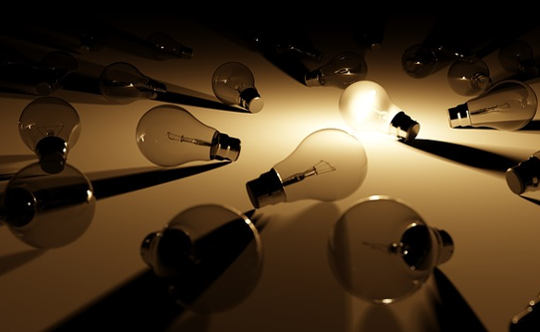
Roger Fisher (1922–2012) served as a reconnaissance pilot in World War II and then graduated from Harvard Law School, becoming a professor there in 1958. Witnessing maiming and death firsthand during the war and then seeing the destructive effects of costly, protracted litigation as a partner in a major law firm, Fisher was passionate about finding more creative alternatives to resolve conflict.
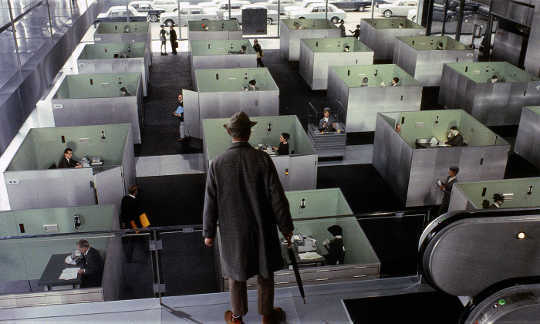
More and more companies, government agencies, educational institutions and philanthropic organisations are today in the grip of a new phenomenon. I’ve termed it ‘metric fixation’. The key components of metric fixation are the belief that it is possible – and desirable – to replace professional judgment (acquired through personal experience and talent) with numerical indicators of comparative performance based upon standardised data (metrics); and that the best way to motivate people within these organisations is by attaching rewards and penalties to their measured performance.
On average, men pick up on visual motion significantly faster than women do, according to a new study. Humans’ ability to notice moving objects has always been a useful skill, good for avoiding an animal predator in ancient times and crossing a busy street in the modern world.

Seeing time tick down quickly on a countdown clock may give people more patience than seeing time pass slowly would. In a series of experiments, the speed of a countdown clock affected the patience and decision-making of video game players, both during and after the game, according to David Reitter, associate professor of information sciences and technology at Penn State.

New research may explain why some people—like sports stars—anticipate and react to fast-moving objects much quicker than others. When Serena Williams returns a lightning-quick tennis serve—most of us marvel at her skill and speed. Considering what the human brain overcomes to make it happen, these kinds of feats are nothing short of miraculous.

My friend Mark has been a physician for over 40 years. Recently he told me a story that helped me understand what real healing is.

We feel good when both the rational and emotional parts of our brain interact perfectly and are in balance. Things to do with our feelings and emotions are dealt with by the right side, while the left side handles analytical thinking.

Miracles happen all the time. You probably know someone who has had a miracle happen to them, or maybe a miracle has happened to you.
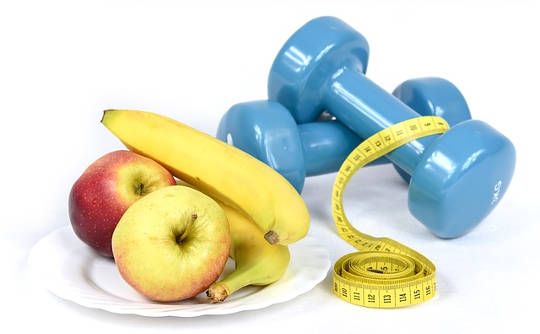
While healthy eating, regular physical exercise, stress management, and getting enough sleep constitute advice that our grandparents might have provided, we all need the tools to move from knowing to doing, from thought to belief to massive action.

The busy habit is just like any other habit — breaking it takes practice. You may be accustomed to rushing from place to place, saying yes when you really need and want to say no, or being the go-to person all the time, and it’s exhausting! I’m sure you know far too well what that feels like...
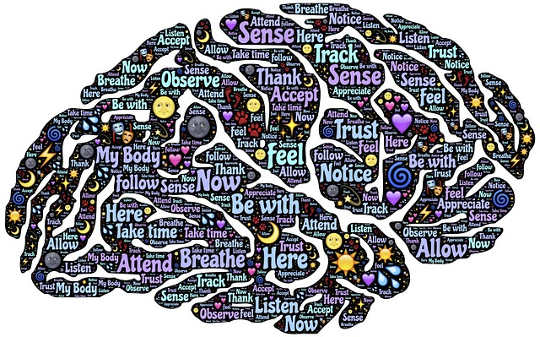
Many of our choices have the potential to change how we think about the world. Often the choices taken are for some kind of betterment: to teach us something, to increase understanding or to improve ways of thinking. What happens, though, when a choice...

Writer Michael Hobbes says there are too many stereotypes about millennials. So, there are three things that every millennial should know. The first one is that there is no evidence for any of the stereotypes about us.

Human beings have essentially two modes or mind-sets that we operate or live in, with, of course, some shades of gray in between. We have what you might call a healthy mode, and another, which you can think of as reactive. When we are in our healthiest state of mind, we 'dance' with life. We're...

Awareness is a crucial element in transforming life's experiences into wisdom and growth. By embracing our errors and weaknesses, we can refine our skills and enhance our understanding of ourselves. This journey requires the courage to face discomfort and the willingness to learn from our mistakes, ultimately leading to mastery in various aspects of life.
The journey of Odysseus in Homer's 'The Odyssey' offers profound insights into healing...

Fostering a legacy of joy empowers individuals to inspire authentic self-expression in...

Junk emotions like anxiety, anger, and jealousy can hinder personal well-being and...
Awareness meditation shifts focus from traditional breath techniques to observing...

The exploration of precognitive dreaming reveals a profound interconnectedness within...

Negative moods can linger and affect overall well-being, but identifying their triggers...

A rare celestial formation is quietly reshaping the foundations of everything we know —...

You don't need a week in silence at a mountain retreat to feel spiritually alive again....