






We often label life events as good or bad, but perspective changes everything. What harms one person may bless another. By moving beyond rigid judgment and learning to listen to the heart, we can find inner peace and harmony. Each choice becomes an opportunity to live more fully, not through rules set in stone, but by tuning in to the wisdom of the present moment.
In This Article
- What happens when life feels split into extremes?
- Why do we defend “our side” at all costs?
- How can perspective shift a problem into a blessing?
- What role do judgment and guilt play in our lives?
- Is the path to inner peace found in listening to the heart?
Beyond Good and Bad: Finding Peace in a World of Extremes
by Marie T. Russell, InnerSelf.com
It seems like we have come to a time of extremes. Whereas we used to live in a world of middle grounds, now we live in a world of extreme opinions, actions, and beliefs. People’s attitudes seem to be that something is either totally right or totally wrong, absolutely good or absolutely bad — no in-between.
The consequence of this is the breakdown of open communication, the loss of harmony, and even the loss of wishing others well. In these times of extremes, we seem to have developed what I call the “football team mentality.” The team we cheer for can do no wrong. It doesn’t matter whether the players cheat, lie, or act without integrity. Because they’re on our team, we defend them without question.
And this mindset extends far beyond sports. We see it in politics, religion, diet, education — in possibly every arena of life. We have reached a point where the unspoken rule is “I’m right and you’re wrong.” And worse, many of us are unwilling to consider the possibility that our perspective might have flaws, and that the other person's might have some value.
Yet life continually reminds us that there are always two sides to every story. What seems terrible from one view may be a blessing from another. An old Chinese parable illustrates this well:
A farmer’s horse ran away. His neighbors cried, “Oh, that’s terrible!” The farmer replied, “Maybe.” The next day, the horse returned with several wild horses. “How wonderful!” the neighbors said. The farmer shrugged: “Maybe.” The farmer’s son tried to ride one of the wild horses, fell, and broke his leg. “How awful!” said the neighbors. Again, the farmer said, “Maybe.” Days later, soldiers came to conscript young men into the army, but the farmer’s son was spared because of his broken leg. “How lucky!” said the neighbors. The farmer simply replied, “Maybe.”
Each apparent blessing or misfortune led to another unexpected outcome. The wise farmer never got drawn into labeling events as good or bad.
One Choice, Once and For All?
As humans we tend to create rules and regulations for ourselves that dictate ways to behave. And then we think that we're set to follow those dictates for the rest of our life. Even as children we're asked: what do you want to be when you grow up? This question assumes or implies that you make a choice and you stick with it for the rest of your life.
Yet we change every day. Life changes every day. So why would what is good for us not also change every day depending on who we are at that moment, where we are, and what we're doing?
So rather than setting rigid rules for ourselves, it is wiser to listen, pay attention, and go with the energy of the moment. Each moment carries its own needs, its own direction. When we tune in to our heart, to our inner wisdom, we can discern the "best" way for that particular moment and that particular situation.
This impulse to divide life into permanent categories of right and wrong is as old as humanity itself. According to biblical mythology, Eve’s so-called “mistake” was eating from the Tree of Knowledge of Good and Evil. From that moment, the human mind began categorizing life as right and wrong, good and bad.
Throughout history, entire cultures have been annihilated because their way of life was judged “wrong” or even evil by those with more power. Wars have been waged, families torn apart, and neighbors turned into enemies over these judgments. Religion, in particular, has fueled misery by insisting one way is good while another is evil. And today, politics has become another arena for these divisions.
Daniel Quinn, in his book Ishmael, wrote: “Whatever I can justify doing is good, and whatever I cannot justify doing is evil.” That simple observation is a sobering mirror: our judgments usually say more about our preferences than about any absolute truth. This is why it is so important to weigh our actions not in our mind but in our heart. The mind will rationalize and can always find reasons to do the harmful thing if it thingks it is of personal benefit to the ego, while the heart will hold to the golden rule of "do no harm".
Good or Bad?
With many of the things that go on around us we may wonder: are they good or are they bad? To give a simple example: imagine you’re walking home carrying a delicate paper sculpture when it begins to rain. For you, the rain is disastrous. But down the road a farmer’s crops, parched from drought, are saved by that same rain. What destroys your creation gives him life.
The lesson is simple yet profound: what is good for one may be bad for another. And when we try to impose our judgments and opinions on everyone, misunderstandings, disharmony and conflict soon follow.
We even torment ourselves with this habit. From an early age many of us were taught that we were “born sinners,” inherently bad. We internalized a judge and jury that convicts us for mistakes, trapping us in guilt, shame, or self-blame. We classify our own behavior as good or bad and then punish ourselves accordingly. No wonder so many live in quiet misery or bubbling rage.
Who Are We To Judge?
We have not lived another person’s life, walked their path, or carried their burdens. Even when we know someone well, we cannot truly measure their choices against our experiences. At best, we can only evaluate ourselves. And even then, we must be careful: many of the beliefs we hold were simply handed down by parents, teachers, or society. They are borrowed judgments, not deeply examined truths.
Perhaps the key to harmony — both inner and outer — is to be open to all dimensions of a situation. When we open our hearts and minds beyond our limited perspective, we begin to glimpse the larger picture. Life is like a vast puzzle. Each person is a piece — different, irregular, sometimes confusing — but every piece is necessary to complete the whole. If every piece were the same, there would be no picture at all.
So instead of judging others, let’s give them space to live their life lessons, just as we live ours. Some people in the “school of life” seem to study diligently, others appear to resist or cause trouble, but all play their part. Our role is not to dictate who is right or wrong but to focus on our own path. Our inner compass — our heart, our conscience — is the best guide to the next step. If a choice brings us peace, it is aligned. If it leaves us restless or guilty, perhaps it is time to choose differently.
Is There No Good and Bad?
Does this mean some choices are inherently good and others bad? Not exactly. It depends on the life we want to create. Do we prefer turmoil and self-reproach, or do we prefer inner peace? The answer lies in listening within.
At the end of the day, our judgments, actions, and choices shape only our own state of being. We cannot decide what is good for another. We can only align ourselves with the angels of our better nature — and trust that by living from the heart, we help weave a little more peace and harmony into the great puzzle of life.
About The Author
 Marie T. Russell is the founder of InnerSelf Magazine (founded 1985). She also produced and hosted a weekly South Florida radio broadcast, Inner Power, from 1992-1995 which focused on themes such as self-esteem, personal empowerment, and well-being. Her articles focus on transformation and reconnecting with our own inner source of joy and creativity.
Creative Commons 3.0: This article is licensed under a Creative Commons Attribution-Share Alike 4.0 License. Attribute the author: Marie T. Russell, InnerSelf.com. Link back to the article: This article originally appeared on InnerSelf.com
Related Book:
Ishmael: An Adventure of the Mind and Spirit
by Daniel Quinn.
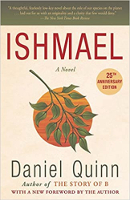 One of the most beloved and bestselling novels of spiritual adventure ever published, Ishmael has earned a passionate following among readers and critics alike.
TEACHER SEEKS PUPIL. Must have an earnest desire to save the world. Apply in person.
"It was just a three-line ad in the personals section, but it launched the adventure of a lifetime." So begins an utterly unique and captivating novel. In Ishmael, which received the Turner Tomorrow Fellowship for the best work of fiction offering positive solutions to global problems, Daniel Quinn parses humanity’s origins and its relationship with nature, in search of an answer to this challenging question: How can we save the world from ourselves?
Click here for more info and/or to order this book. Also available as an Audiobook, a Kindle edition, and with a Library binding. This special twenty-fifth anniversary edition features a new foreword and afterword by the author, as well as an excerpt from My Ishmael.
Article Recap
Good and bad are never absolute. By loosening judgment and listening to our hearts, we step closer to harmony and inner peace. Each choice is an invitation to live with compassion, recognizing that life’s puzzle only makes sense when all pieces — different as they are — fit together.
#GoodAndBad #InnerPeace #Judgment #Harmony #HeartWisdom #LifeChoices #SelfAwareness #ConsciousLiving #PeaceWithin #BeyondJudgment