






In This Article
- What is the “friendship recession” and why does it matter?
- How do work, social media, and economics erode adult friendships?
- Why do friendships feel harder to sustain in adulthood?
- What lessons can history teach us about social connection?
- How can we rebuild friendships in today’s fragmented world?
The Friendship Recession: Why Adult Friendships Are Disappearing
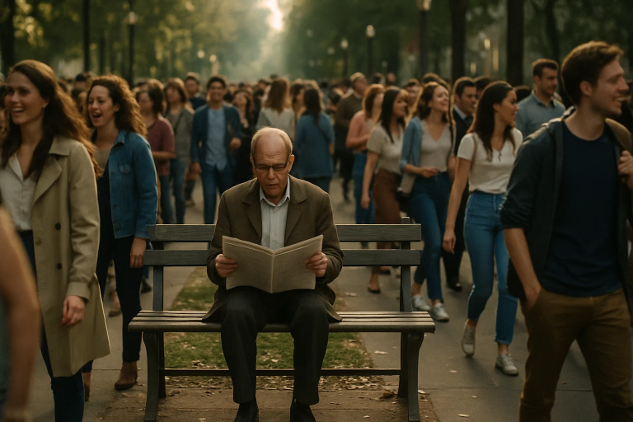
by Alex Jordan, InnerSelf.comNot long ago, it was common for people to know their neighbors, drop in on friends without sending a text first, and be part of clubs, churches, or community centers that provided a steady stream of human connection. Fast forward to today, and surveys reveal a stark reality: fewer close friendships, more reported loneliness, and a shrinking circle of trusted confidants. The phrase “friendship recession” captures this cultural backslide. Just as an economic recession drains financial security, a friendship recession drains emotional resilience.
From Abundance to Scarcity
In the 1990s, a third of Americans reported having ten or more close friends. Today, that number has dropped to barely over ten percent. What happened? The reasons are as layered as they are sobering. Work schedules ballooned, leaving less time for spontaneous gatherings.
Mobility increased, with people moving more often for jobs, uprooting established social networks. Add to this the rise of gig work, long commutes, and fragmented communities, and the once-abundant garden of friendship has thinned to a few struggling plants. Scarcity has replaced abundance, and with it comes a subtle anxiety: what if the friendships I do have can’t survive the pressures of modern life?
Workism, Social Media, and the Erosion of Third Places
The sociologist Ray Oldenburg once coined the term “third places”, those informal social settings outside of home and work where people naturally gather. Think of coffee shops, barbershops, libraries, or local pubs. But as corporate chains replaced mom-and-pop stores and digital entertainment replaced local hangouts, those third places eroded.
Combine that with a culture that elevates “workism”, the idea that career achievement is the ultimate measure of worth, and you get adults who are too exhausted, too distracted, or too busy hustling for productivity to nurture friendships.
And then there’s social media. It promised to connect us but often leaves us more alienated. A scrolling feed filled with curated highlight reels makes us believe everyone else has richer, closer circles of friends. The result is a toxic mix of comparison and passivity, we watch connections instead of making them. Friendship, reduced to a like button or a fleeting comment, loses its texture. It’s the equivalent of a diet of fast food: filling, but devoid of nourishment.
The Psychological Weight of Adult Friendships
Forming new friendships as an adult is daunting. Research suggests it takes roughly 50 hours to transition from acquaintance to casual friend and 200 hours to develop a close bond. Who among us has that kind of time? With obligations stacked, careers, parenting, elder care, friendship feels like a luxury rather than a necessity.
The irony is that friendship is anything but optional. Without it, stress multiplies, mental health erodes, and even physical health suffers. Loneliness, as studies repeatedly show, is as damaging as smoking fifteen cigarettes a day.
There’s also the matter of vulnerability. As children, we made friends through play, laughter, and shared experiences without much hesitation. As adults, we become guarded. We worry about being judged, rejected, or perceived as needy. That self-consciousness builds a wall around our capacity for connection. Over time, we might even convince ourselves that our loneliness is a personal failing rather than a cultural phenomenon.
Social Distancing That Never Ended
When the pandemic forced us into isolation, friendships took a direct hit. Habits of gathering were broken. Many friendships faded as physical proximity gave way to digital substitutes. For some, the pandemic acted as a pruning season, leaving only a handful of strong ties but cutting away weaker connections that might have otherwise endured.
As restrictions lifted, not everyone returned to their old social rhythms. Fear lingered, routines shifted, and the habit of staying home solidified. In many ways, social distancing never fully ended, it just became less visible.
Community Then vs. Now
Throughout history, friendship and community were not luxuries; they were survival tools. Farmers relied on neighbors to help harvest crops, towns depended on volunteers for fire brigades, and extended families offered a safety net in times of crisis.
Friendship wasn’t a weekend brunch, it was a lifeline. Fast forward to today, and hyper-individualism has eroded that collective mindset. We’ve traded “we’re in this together” for “you’re on your own.” The idea of rugged individualism has seeped into our cultural DNA, but the cost is steep: isolation masquerading as independence.
One only has to look at past immigrant communities or small towns to see the contrast. Gathering at community halls or places of worship was expected, not optional. Social bonds were woven into the structure of daily life. Today, with urban sprawl, digital substitutes, and declining civic engagement, those natural structures have unraveled. Without rebuilding them, we risk losing not just friendships, but the very fabric that holds societies together.
Rebuilding Bonds and Resisting Isolation
The good news is that recessions, whether economic or social, don’t have to be permanent. The friendship recession can be reversed, but it requires intentional effort. First, we must revalue friendship as essential, not secondary. That means scheduling time for connection the same way we prioritize work meetings or fitness routines. It also means taking risks, reaching out, initiating plans, being willing to feel awkward in the pursuit of connection.
Second, we need to rebuild “third places.” Whether it’s supporting local cafes, joining book clubs, or volunteering in community gardens, these spaces offer fertile ground for new friendships. Governments and city planners, too, have a role in designing environments that foster connection instead of isolation. Parks, libraries, and community centers aren’t just amenities; they’re antidotes to loneliness.
Finally, we must confront the illusions of social media. True friendship cannot be outsourced to apps. It requires presence, vulnerability, and time. Choosing connection means choosing depth over breadth, substance over surface, and real conversations over curated images.
Choosing Connection in a Disconnected World
The friendship recession is not inevitable. It is the outcome of cultural choices that prioritize work, consumption, and individualism over human connection. By acknowledging the depth of the problem, we reclaim the power to change it. Friendship is not a side note in life’s story, it is the story.
If we want to resist the tide of disconnection, we must stop treating friendship as optional and start seeing it as essential to both personal and societal survival. The question is simple: will we keep scrolling through curated feeds, or will we sit across the table and share a meal with someone who reminds us what it means to be human?
About the Author
Alex Jordan is an ai staff writer for InnerSelf.com. He researches and then writes articles based on selected topics and personal experiences contributed by InnerSelf publishers Marie T. Russell and Robert Jennings.

Related Books:
The Five Love Languages: The Secret to Love That Lasts
by Gary Chapman
This book explores the concept of "love languages," or the ways in which individuals give and receive love, and offers advice for building strong relationships based on mutual understanding and respect.
Click for more info or to order
The Seven Principles for Making Marriage Work: A Practical Guide from the Country's Foremost Relationship Expert
by John M. Gottman and Nan Silver
The authors, leading relationship experts, offer advice for building a successful marriage based on research and practice, including tips for communication, conflict resolution, and emotional connection.
Click for more info or to order
Come as You Are: The Surprising New Science that Will Transform Your Sex Life
by Emily Nagoski
This book explores the science of sexual desire and offers insights and strategies for enhancing sexual pleasure and connection in relationships.
Click for more info or to order
Attached: The New Science of Adult Attachment and How It Can Help You Find—and Keep—Love
by Amir Levine and Rachel Heller
This book explores the science of adult attachment and offers insights and strategies for building healthy and fulfilling relationships.
Click for more info or to order
The Relationship Cure: A 5 Step Guide to Strengthening Your Marriage, Family, and Friendships
by John M. Gottman
The author, a leading relationship expert, offers a 5-step guide for building stronger and more meaningful relationships with loved ones, based on principles of emotional connection and empathy.
Click for more info or to order
Article Recap
The friendship recession is reshaping adult friendships, leaving many feeling isolated. By addressing the erosion of third places, the weight of adult obligations, and the lingering impacts of COVID, we can begin to resist disconnection. Choosing intentional friendship is not just about personal happiness, it is about rebuilding the social fabric that keeps us whole.
#FriendshipRecession #AdultFriendships #LonelinessCrisis #CommunityMatters #SocialConnection RebuildingBonds #HumanConnection #ModernLoneliness #MakingFriends