InnerSelf Magazine
New Attitudes — New Possibilities
August 31, 2026
|
|
A Note From the Editors
The Body Keeps Score, the Mind Keeps Looping — and Both Need Your Attention This Week
This issue sits at the intersection of the physical and the psychological — not as separate energies, but as the tangled, breathing whole that we actually are. What we do with our body shapes what our brain can do, and vice versa. How we rest determines how we perform, and how we perform determines how we rest. The stories we absorb from the culture around us influence the habits we keep repeating, even when part of us knows better.
None of this is new information, exactly — but the framing matters. Sometimes the same truth, said differently, lands and clicks.
We have also included pieces that look outward — at the systems and stories that shape the world your children are growing up in, and the political and social fractures that do not resolve themselves by being ignored. Real well-being is not just personal. It lives in community, in relationship, in the willingness to see clearly even when clarity is uncomfortable. That willingness is what we are here to support.
— Robert Jennings & Marie T. Russell, InnerSelf.com
|
|
Featured This Week
|
|

Personal Growth & Behavior
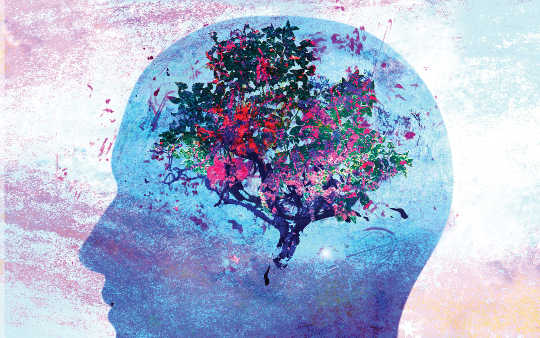
Why Do We Keep Doing What We Know Is Bad for Us?
By Marie T. Russell, InnerSelf.com
You know the feeling. You have made the decision a dozen times. You have explained to yourself, clearly and rationally, exactly why the habit is hurting you. And then — sometimes within hours — you do it again. This is not a character flaw. It is not weakness. It is the result of neurological wiring that is older than your best intentions, and understanding it is the first step to actually changing it.
Marie T. Russell brings both honesty and compassion to this question — not to excuse the patterns, but to illuminate them. Because when you understand why a behavior persists despite your best efforts to stop it, you can finally stop fighting yourself and start working with the actual architecture of change. That shift in approach makes all the difference.
Read the Full Article →
|
|

Economy & Society
The Cage We Keep Rebuilding and What Comes Next
By Robert Jennings, InnerSelf.com
One of the most disorienting things about living through systemic dysfunction is how familiar it all starts to feel. The same economic pressures, the same political cycles, the same promises followed by the same disappointments — and yet here we are, participating in the reconstruction of the very structures that constrain us. It is not stupidity. It is something more complicated: the deep human tendency to choose the known cage over the terrifying open field.
Robert Jennings does not offer easy comfort here, and that is exactly why this piece is worth your time. He maps the mechanisms by which broken systems perpetuate themselves — and more importantly, where the actual pressure points for change are located. If you have felt the frustration of watching the wheel turn without moving forward, this analysis names what you have been sensing, and points toward what might actually be different this time.
Read the Full Article → |
|
|
Health & Performance
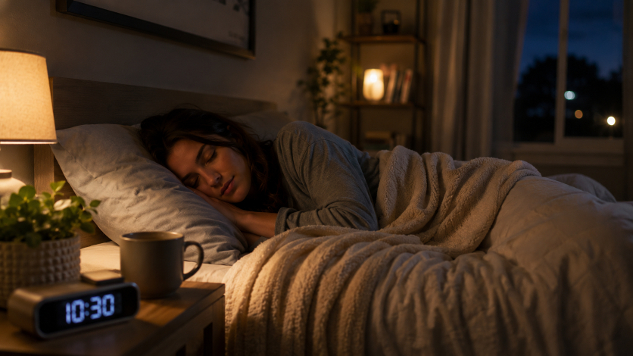
How Much Sleep Do You Really Need and 5 Ways to Improve the Sleep You Get
By Beth McDaniel, InnerSelf.com
We live in a culture that quietly celebrates sleep deprivation as a badge of productivity. You have probably said it yourself — "I only got five hours" — with a mix of complaint and pride. But there is nothing noble about it, and the evidence has been piling up for decades: chronically short sleep is not a minor inconvenience. It is one of the most consistent predictors of cognitive decline, emotional dysregulation, metabolic disruption, and shortened life span. That is a steep price for inbox zero.
The good news is that sleep is not entirely out of your control. The five strategies in this piece are not the usual generic advice — they are grounded in how sleep actually works, and they address the specific things most people are getting wrong without realizing it. If you have ever lain awake convinced your brain simply does not know how to rest anymore, this one is for you.
Read the Full Article → |
|
|

Culture & Society
Who Counts as a Victim: The Real Engine Behind Political Moral Disagreement
By Robert Jennings, InnerSelf.com
Political arguments often appear to be about policy — tax rates, immigration numbers, healthcare systems. But underneath most of the loudest disagreements is a more primal question that rarely gets named directly: who deserves our moral concern? Whose suffering counts? Who is a legitimate victim and who is not? The answer to that question, it turns out, organizes almost everything else about how a person votes, what they find outrageous, and who they are willing to hear.
This piece does not tell you which side is right. It does something more useful: it maps the underlying moral architecture that makes genuine conversation across political lines so genuinely hard. Understanding the mechanism does not dissolve the disagreement, but it does make it possible to engage with rather than simply react to. That is a more useful starting point than most of us are working from.
Read the Full Article → |
|

Personal Growth
Why Chilling Out Instead of Maxing Out Can Actually Improve Your Performance
By Alex Jordan, InnerSelf.com
There is a deeply ingrained belief in high-performance culture that more effort always equals better results. Push harder. Sleep less. Squeeze every hour. And for a while, it even seems to work — until it catastrophically does not. The research on recovery, attention, and output tells a different story: strategic ease is not the enemy of excellence. In many contexts, it is the mechanism that makes excellence sustainable at all.
If some part of you suspects that your relentless push is starting to produce diminishing returns, this piece will give that suspicion some scientific scaffolding. More importantly, it offers a practical reframe — not an invitation to stop caring, but a permission slip to stop burning yourself down and call it dedication. Your best work requires a nervous system that is not running on fumes.
Read the Full Article → |
|
Relationships & Parenting
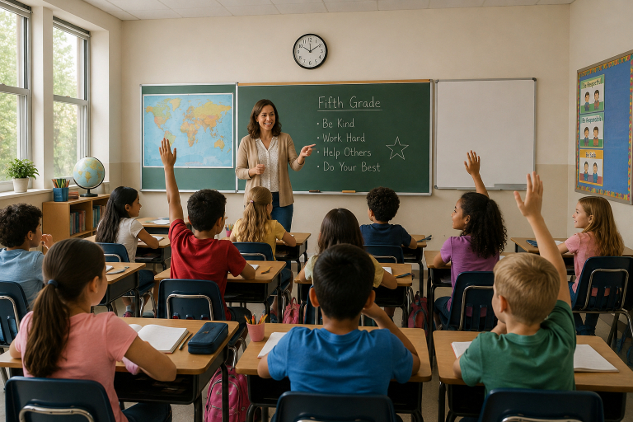
When Playing Alone Is a Choice and Why It Matters for Your Child
By Alex Jordan, InnerSelf.com
When a child chooses to play alone, many parents feel a flicker of worry. Is she lonely? Is he not connecting properly? In a culture that prizes sociability as a marker of health and happiness, a child content in her own company can trigger all kinds of anxious second-guessing. But the ability to be alone — truly, comfortably alone — is one of the more underrated developmental gifts a child can develop.
This piece makes an important distinction between solitude chosen and isolation imposed, and explores what solo play actually develops: imagination, self-regulation, tolerance for discomfort, and a capacity for internal life that will serve a person across every decade. If you have a child who prefers their own company sometimes, read this before you intervene.
Read the Full Article → |
|
|

Society & Politics
The Authoritarian Clock Is Running Out
By Robert Jennings, InnerSelf.com
Authoritarian movements share a paradox: they project absolute power precisely because they are fragile. The bombast, the loyalty tests, the relentless manufacturing of enemies — these are not signs of strength. They are the behaviors of a system that cannot sustain itself on merit alone, and history has a long record of what eventually happens. The clock does run out. The question is always what comes after, and who is ready to shape it.
This is not a piece designed to reassure you that everything will be fine without your participation. It is a rigorous look at the structural vulnerabilities in authoritarian systems and a serious argument for why the current moment — uncomfortable as it is — may also be an inflection point. Understanding that does not make the present less difficult. But it does change what you do with your energy and attention right now.
Read the Full Article →
|
|
|
Health & Fitness
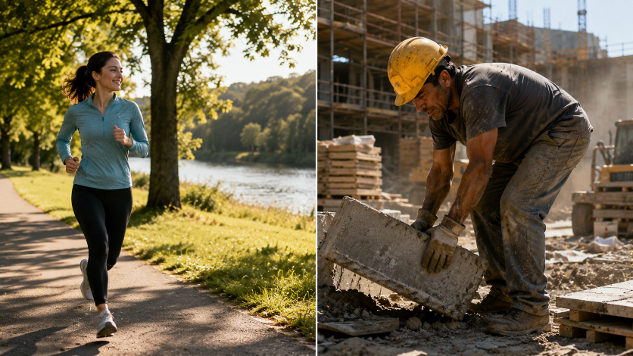
Why Hard Physical Work Is Not the Same as Exercise for Brain Health
By Alex Jordan, InnerSelf.com
You might assume that a long, physical day on your feet — hauling boxes, landscaping, standing through an eight-hour shift — counts as exercise. Your muscles ache, you are tired, you have certainly moved. But the research tells a different and somewhat uncomfortable story, and it has real consequences for how you think about protecting your brain as you age. Physical labor and deliberate exercise are not the same thing. Not even close.
What separates them is not just intention — it is physiology. The conditions under which your body moves, the recovery it gets, and the autonomy you have over that movement all change what happens in your brain. If you work hard with your hands for a living and have been quietly assuming that covers your cognitive health needs, this article will reframe your understanding in ways that are worth knowing now, not later.
Read the Full Article → |
|

Parenting & Technology
What Children Must Learn About AI Before the World Teaches Them Wrong
By Alex Jordan, InnerSelf.com
Your child is already using AI. Maybe with your knowledge, maybe without it. They are interacting with tools that generate text, images, voices, and information with a fluency that makes it very hard to know what is real and what is manufactured. And the world — through gaming platforms, social media, and search — is already teaching them a set of lessons about what AI is and what it is for. The question is whether those lessons are the ones you want them to have.
This piece is not a panic piece. It does not argue for banning screens or pretending the technology does not exist. It makes a more grounded and actionable case: that the adults in a child's life have a genuine window of opportunity right now to shape how a young person understands and relates to AI — and that window will not stay open indefinitely. What your child learns first tends to stick longest.
Read the Full Article → |
|

Health & Wellbeing
Why Your Stress Changes With the Seasons and Five Ways to Cope
By Beth McDaniel, InnerSelf.com
Have you ever noticed that your anxiety seems different in September than it did in June? That the specific texture of your stress shifts as the light changes, the temperature drops, and the calendar fills up with obligations that did not exist two months ago? That is not coincidence or imagination. Your stress response is genuinely seasonal, shaped by light exposure, circadian rhythms, cortisol cycles, and the social demands that cluster around certain times of year.
The five coping strategies here are calibrated to this specific transition — the late-summer to early-fall shift that catches many people off guard. Not because they are not prepared people, but because they have been treating stress as a fixed quantity rather than a moving target that requires seasonal adjustment. This piece helps you make that adjustment before you are already behind the curve.
Read the Full Article → |
|
More From InnerSelf
|

Relationships
Effective Caregiving: Strategies for Emotional Well-being
Jude Bijou
Caregiving is one of the most demanding things a person can do — emotionally, physically, and psychologically. Jude Bijou offers grounded strategies for sustaining your own emotional wellbeing while genuinely showing up for someone else.
Read More → |

Health & Fitness
Overcoming Barriers to Starting an Exercise Routine
Andrew Lavender
The hardest part of any exercise routine is starting — especially when you are out of shape, time-pressed, or carrying the weight of previous failed attempts. Andrew Lavender addresses the real barriers honestly and practically.
Read More → |
|
|

Mental Health
Understanding Emotion Regulation and Its Challenges
Leanne Rowlands
For people living with anxiety and mood disorders, managing emotions can feel like trying to steer in a car with no wheel. Leanne Rowlands explains what is actually happening neurologically — and why understanding it is not weakness, it is the beginning of change.
Read More → |

Personal Growth
Impact of Smartphone Photography on Memory and Identity
Giuliana Mazzoni
Every photo you take changes the memory you thought you were preserving. Giuliana Mazzoni examines the surprising ways that smartphone photography is reshaping how we remember the past — and, in turn, who we understand ourselves to be.
Read More → |
|
|

Food & Nutrition
Rediscovering Brussels Sprouts as a Superfood
Trevor George
They spent decades as the most maligned vegetable at the dinner table. Trevor George makes the scientific case for why Brussels sprouts deserve a serious second look — and what their nutritional profile can actually do for your body.
Read More → |

Personal Growth
Healing from Grief and Fear Through Love
Joseph Gallenberger, Ph.D.
Joseph Gallenberger writes from the far side of profound loss and fear, tracing the path from grief's darkest corners toward a love that does not require the absence of pain. A deeply human account of what healing actually looks like from the inside.
Read More → |
|
|
Spirituality & Belief
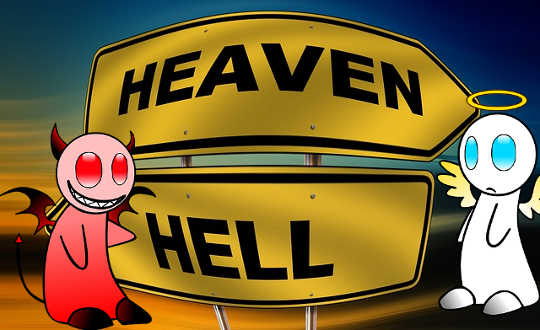
Evolution of the Concept of Hell in Literature
Meghan Henning
The idea of hell has a long and surprisingly complex literary history — and Meghan Henning traces how it has changed, what it was originally designed to do morally, and why it no longer carries the persuasive weight it once did in motivating ethical behavior.
Read More → |
Health & Healing
The Power of Conscious Relaxation for Healing
Jim Dreaver
Most of us do not know how to truly relax — we know how to collapse. Jim Dreaver makes the case for conscious relaxation as an active healing practice, not a passive one, and explains what letting go actually requires of the body and mind.
Read More → |
|
|
Personal Growth & Spirituality
The Role of the Solar Plexus Chakra in Healing
Alan Seale
Alan Seale explores how the solar plexus chakra relates to attachment, the shadow self, and the deeper work of coming to peace with who we are — including the parts we would prefer not to look at directly.
Read More → |
|
|
| |
|
Astrology & Cosmic Guidance
|
|
Pam Younghans — NorthPoint Astrology Journal
Horoscope
Astrological Overview and Horoscope: August 31 to September 6, 2026
Pam Younghans
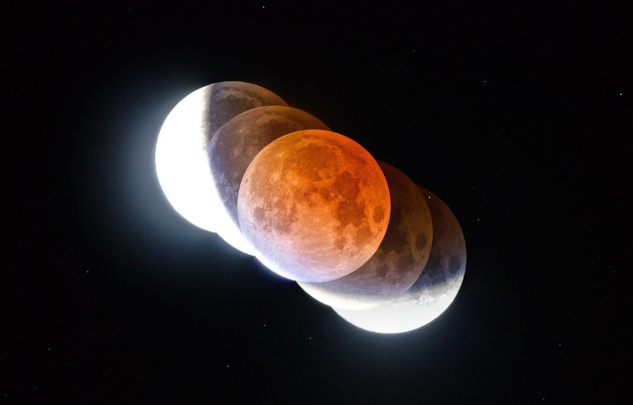
As eclipse season draws to a close, the final week of August and the opening days of September bring a striking paradox of planetary energies — a harmonious Jupiter-Saturn trine...
Read more
|
|
|
Planetary Events
Mercury at home in Virgo until September 10, 2026
Clara Corwin, InnerSelf.com
Mercury is at its most precise and analytical in Virgo — a window for clear thinking, careful communication, and attention to detail that rewards those who slow down enough to use it.
Read More →
Full Moon in Pisces Illuminated What We Have Been Refusing to See
Clara Corwin
A Full Moon in Pisces asks you to look at what you have been conveniently setting aside. Its light is soft but revealing — and what surfaces under it tends to be exactly what needs your honest attention.
Read More →
Mars residing in Cancer from August 12 - October 2, 2026
Clara Corwin, InnerSelf.com
Mars in Cancer channels its drive inward — toward home, family, and emotional security. Expect protective instincts to run high and motivations to be more personal than professional during this transit.
Read More →
Sun entered Virgo -- August 22, 2026
Clara Corwin, InnerSelf.com
The Sun's move into Virgo shifts the seasonal energy toward discernment, service, and practical refinement — a natural time to assess what is working and trim what is not.
Read More →
New Moon in Leo August 12, 2026
Clara Corwin, InnerSelf.com
The New Moon in Leo planted seeds of creative courage and self-expression. If you set intentions around that date, the current Virgo season is now the time to put the practical structure around them.
Read More → |
|
|
Weekly Horoscope
InnerSelf Horoscope August 30 - September 5, 2026
Clara Corwin, InnerSelf.com
Your weekly horoscope for August 30 through September 5, 2026 — what the cosmic weather has in store for each sign as summer gives way to the sharper, more deliberate energy of early fall.
Read More → |
|
|
Your Daily, Weekly & Monthly Horoscope
We also publish daily, weekly, and monthly horoscopes — visit our Horoscope page to stay current with the cosmic weather.
|
|
|
Before You Go
Pick One Thing Your Body Is Asking For — and Actually Do It This Week
Here is the thing about a week like this one: there is a lot to take in, and most of it points in the same direction — that the gap between what you know and what you do is where your real work lives. You know sleep matters. You know relentless effort has a ceiling. You know the patterns you keep repeating are not mysterious, they are neurological. And yet knowing has not always been enough to change anything, has it? That is not a character flaw. It is just the human condition, examined honestly.
The bigger questions — about the systems we participate in, the moral frameworks that divide us, the technology our children are absorbing without our guidance — those require sustained attention and collective effort. You cannot solve them this week. But you can decide this week to look at them clearly rather than look away. Clarity is not comfortable. It is, however, the only honest starting point for anything that actually changes.
Your specific challenge this week: before Friday, choose one thing your body has been signaling — more sleep, less intensity, a walk that is for your brain and not just your schedule — and treat it not as self-care but as maintenance. Non-negotiable, unglamorous, necessary. The same way you would charge a phone that is at four percent. You cannot think well, connect well, or act well on empty. Start there, and see what becomes possible.
With care and honesty,
Robert Jennings & Marie T. Russell
InnerSelf Magazine
|
|
InnerSelf Magazine
New Attitudes — New Possibilities
www.InnerSelf.com
|
|